Media Page
Gowan's Heirloom Cider is the most-decorated cidery at the 2026 World Beer Cup. 2025 Great American Beer Festival Cidery of the Year AND Cidermaker of the Year. The world’s #1 ciders in both pure-apple classes — made entirely from organic heirloom apples on a seven-generation family farm in California’s Anderson Valley.
Fifteen Story Angles
1. The Pure-Apple Sweep
At the 2026 World Beer Cup, Gowan’s Heirloom Cider won Gold in BOTH pure-apple classes — Tannic (Classic Dry) and No/Low Tannin (Gravenstein) — the only classes that judge ciders made from apples alone, with no spices, botanicals, or wood aging. The world’s #1 ciders in both classes, from one family farm.
2. The Vindication Story
Industry experts told the Gowan family their heirloom apples wouldn’t work for premium tannic cider and recommended they buy bittersweet concentrate from European varieties bred for the purpose. The family kept farming. Result: five Tannic medals across three major competitions since 2024 — the longest competitive run in the class — including the world’s #1 and #2 tannic ciders at the 2026 World Beer Cup.
3. The Seven-Generation Story
Seven generations have planted, cultivated, and harvested, then sold and delivered apples and cider. Back in the day this was all done by horses, wagons, and plows. And each generation planted new kinds of trees, accounting for the now over 120 heirlooms from all around the world, and including true American heirlooms that first took root and bore fruit in this country.
A truly one of a kind heirloom orchard. Only 3% of family businesses survive to the fourth generation. Gowan’s is on its seventh, lasting through floods, freezes and droughts, world wars and pandemics, depressions and recessions. Family matriarch Josephine Gowan, a connection to the fourth generation, is now 100 — and a seventh-generation Gowan is already walking the orchards. 150 years of continuous farming on the same Philo, California land.
4. Terroir Matters for Apples Too
Wine culture has long understood that where a grape grows shapes what it becomes — the soil it drinks from, the climate it embraces, the rootstock it’s grafted to, the swing between warm days and cool nights. The same is true for apples. The same variety grown in Anderson Valley tastes different from one grown 200 miles north — because the land is different. The same variety on sandy loam by the river produces different fruit than it does on clay at the top of the hill. Rootstock affects flavor. Soil affects flavor. Climate affects flavor.
This is a distinct story from the Tannin Vindication — that story is about experts dismissing Gowan’s specific apple varieties. This one is a broader principle the cider world is only beginning to reckon with: terroir is as fundamental to apple character as it is to wine. Gowan’s has 150 years of data on one piece of land — seven generations of learning how Anderson Valley’s spring tease, Pacific breezes, and diverse soils shape what comes off the tree. The world’s #1 ciders in both pure-apple classes are the result.
5. The Only Place in the World
There is nowhere else in the world where you can sit under a century-old apple trees, including Gravensteins, and Sierra Beauty trees, and drink the cider made from the fruit of those same trees. That is not a marketing line. That is a literal, verifiable fact about one two-acre orchard on Highway 128 in Philo, California.
Gowan’s Cider Garden — California’s first outdoor orchard tasting room — is two acres of century-old heirloom apple trees, roses climbing an antique redwood fence, wood chairs in the dappled shade, and cider poured at a bar built among the trees. Visitors browse among the tree identified hanging sign with its variety name, estimated year planted, and harvest month — turning a beautiful afternoon into a living history of the apple world. Visitors describe it as enchanting, as if stepping into a fairy tale.
For travel, food, and lifestyle journalists: this is the angle. Not “cidery has tasting room.” One of California’s great drives (Hwy 128, Cloverdale to the Mendocino Coast) ends at a fairy-tale orchard where the world’s #1 ciders are poured by the family that grew the apples. No other tasting room experience in America can make that claim — because no other tasting room experience in America is this.
6. Women in Farming: A Living Legacy
In the year of the International Woman Farmer, Gowan’s Heirloom Cider is woman-owned — and the story of women on this farm runs far deeper than a title. Sharon Gowan is a founding cidermaker and the force behind the brand, business, and national distribution of the world’s most-decorated cidery. She is still learning her craft from Josephine Gowan, now 100 years old, who ran an all-women orchard crew on this same land when she was a young bride.
Four generations of the Gowan family are living on the farm today. Two of them are women who have farmed this land and shaped everything that comes out of it. The knowledge Josephine carries — nearly a century of seasons on the same ground — is still being passed to the woman pouring the world’s best cider from that same orchard today. For women in agriculture, food, and business journalists, this is not a heritage story. It is a living one.
7. The Sierra Beauty: A Variety the World Lost, and Gowan’s Saved
The Sierra Beauty apple is a California native — found as a chance seedling in the Sierra Nevada mountains around 1870, introduced to commerce by General John Bidwell, founder of Chico, and celebrated for its extraordinary flavor: crisp, juicy, aromatic, with the kind of complexity that makes pomologists write poetry. It was also nearly extinct. As the nursery network that carried it faded after World War I, the Sierra Beauty disappeared from catalogs and, eventually, from memory.
Amateur pomologists searched for it for decades. Fruit expeditions were organized. Nobody could find it. The whole time, it had been growing quietly at the Gowan family farm in Philo — planted in 1906, a family favorite for baking and eating. When members of the Home Orchard Society finally “re-discovered” it, they found it lovingly cared for on the Gowan farm along Highway 128. The Gowan family had kept the Sierra Beauty alive and in commerce for generations without knowing the rest of the world had given it up for lost.
Today the Sierra Beauty is known as a Gowan “family heirloom” — a special term of distinction acknowledging a special relationship between the family and the variety. It’s in the Cider Garden. And it’s in the bottle. And if you ever buy a Sierra Beauty tree for your backyard, it is a clone of the original tree the Gowan family brought here by horse and wagon in 1906. For food history, heritage agriculture, and California storytelling journalists, the full story is at gowansheirloomcider.com/sierra-beauty-story
8. The Heirloom Apple Renaissance
Five years ago, the Gowan family was told that nobody cared about “old-fashioned” apple varieties that seven generations had curated — that the market had moved on and heirloom apples were a relic. The family kept farming their 120+ varieties anyway. And even planted orchards with 23 new-to-the-farm heirloom varieties.
Today, heirloom apples are one of the fastest-growing stories in food culture — driven by the same forces that made heirloom tomatoes a fixture at every farmers market and fine-dining table in America. Consumers are rediscovering that old varieties carry flavors commercial breeding bred out. And Gowan’s — with one of the most diverse heirloom orchards in America, seven generations of curation, and the world’s top-ranked ciders made entirely from those same “old-fashioned” apples — didn’t just catch the wave. They were already there, 150 years in.
Gowan’s didn’t follow the heirloom apple renaissance. They defined the category — before the world knew there was one.
9. The Gravenstein Story
The Gravenstein apple is iconic to Northern California — and Gowan’s is one of the oldest Gravenstein Growers in the nation. The Gravenstein apple is even celebrated with a special fair every harvest in neighboring Sonoma County’s Sebastopol. The 2026 World Beer Cup Gold for Gowan’s Gravenstein Cider brought world-stage recognition to a heritage variety the region built its identity on. With only two apple-focused classes, locally grown Gravenstein cider was crowned #1 over all apples from around the world — crowned by the world’s top cider and beer judges from over 50 different countries.
10. Know Your Apple: The Transparency Story
Most consumers have no idea where the apples in their cider come from — because nobody tells them. Federal law requires labels to say where a cider is bottled, but not where the apples were grown. A brand can source juice from another state or concentrate from overseas, put “California” front and center in their marketing, and nothing on the label will say otherwise. This misleads consumers and directly undermines the California farmers growing the fruit.
Sharon Gowan helped create the Real California Cider® certification — a voluntary standard that allows consumers, retailers, and restaurants to confirm they are buying cider made from 100% California-grown apples. The certification mark appears on every Gowan’s back label. Surveys show 71% of consumers want locally grown products, and most believe “California” on a label means California-grown. Real California Cider® makes that promise verifiable.
The industry association that originally backed the program is no longer operational, and many cideries that might have supported the certification were actively discouraged from doing so. Fewer than ten California cideries actually use 100% California-grown apples. The rest — including many that market themselves as “California cider” — do not. The certification remains on Gowan’s label. And Gowan’s ciders are the most decorated in the world.
Gowan’s own answer is 100% estate-grown — every apple from trees the family owns, tends, and harvests on their Philo land. Not because the law requires it, but because the consumer deserves to know. And this isn’t just about Gowan’s. California has small family orchards growing extraordinary fruit — farms with their own stories, their own heirloom varieties, their own connection to the land.
When a consumer buys a cider marketed as “California” or “local” that was actually made from out-of-state or overseas concentrate, they miss the chance to support those real farmers. Transparency doesn’t just protect consumers. It protects the farming communities whose livelihoods depend on people choosing to buy local. For food, agricultural policy, and consumer protection journalists, this is a farm-to-glass story with real advocacy behind it: gowansheirloomcider.com/real-california-cider-certified
11. The Wine Country Cider Story
Anderson Valley and Mendocino County were initially renowned for Apples, ( the Apple Show held in conjunction with the Mendocino County Fair and Apple Show in Anderson Valley just celebrated its 100th year, and Gowan’s have been exhibiting there every year. Now Anderson Valley and Mendocino County are world-renowned for wine. And with Gowan’s wins, also world-class cider, made from the same terroir, in the same county, on certified organic ground. The story Mendocino tells across its diverse AVAs — from cool, coastal Anderson Valley to warmer inland regions — now extends to the apple.
12. The Heirloom Orchard
The Gowan family farm grows more than 120 heirloom apple varieties on certified organic orchards — one of the most diverse heirloom orchards in the world. Varieties from Canada (Macintosh), Russia (Astrachan), France (Binet Rouge), Israel (Anna), and American heirlooms (Sierra Beauty, Arkansas Black) curated by seven generations of Gowans. Gowan’s is the leading voice championing heirlooms apples and cider.
13. 150 Years of Land Stewardship: Beyond Organic
Gowan’s certified-organic orchards are the visible part of a commitment that runs much deeper and much longer. Seven generations on the same land have produced a farming philosophy that isn’t a response to a trend — stewardship is family tradition, passed down generation by generation.
Practices in place today: soil conservation and health testing, water conservation, Integrated Pest Management, bee and pollinator habitat, owl boxes for natural pest control, riverbank stabilization, no-till farming, cover cropping between orchard rows, and electric tractors.
And one program believed to be unique in American cider: Re-Cider, a bottle return program where customers bring their empty glass bottles back to the Cider Garden and receive a $1 credit per four bottles returned — keeping beautiful glass in circulation and out of the waste stream. gowansheirloomcider.com/re-cider-your-bottle
For sustainability, agriculture, and environment journalists, Gowan’s is a working demonstration that a 150-year family farm can be commercially competitive at the highest level — world-title ciders — while treating the land as a living system to protect and pass on.
14. One of California’s Great Drives — Highway 128
Highway 128 from Cloverdale to the Mendocino Coast is one of California’s most spectacular drives — rolling oak-studded hills, the Anderson Valley floor, ancient redwood forest, and the dramatic Pacific coastline, all in a single route. No other California road passes through every one of those landscapes.
For travel journalists and road trip content, this is the hook: you’re not asking someone to drive to a cidery. You’re inviting them onto one of California’s great drives — and right in the heart of it, there’s a fairy-tale cider garden under 150-year-old apple trees, poured by the family that has farmed that land for seven generations.
This road has carried Gowan’s apples for 150 years — long before it had a name or a number, by horse and wagon to communities along the valley and the coast. The wagons are gone. The orchard is still there. And the drive is still one of the most beautiful in California.
15. The Bottle: Best Package Design in the Wine Industry
At the 2020 San Francisco Chronicle International Wine Competition — one of the world’s largest wine competitions — Gowan’s Gravenstein Cider and the full Gowan’s cider line received Best in Class: Package in the Classic Ornate category. Only five wineries in the entire competition were recognized for Best-in-Class Packaging. Gowan’s was one of them.
That places Gowan’s among the best package designs in the wine industry — not just cider. The bottle is custom 500ml flint glass with a cartouche, a vintage parchment label featuring bespoke illustrations of the historic family orchards, and gold foil accents. It is the only cider bottle most people have ever seen that belongs on the same table as a great wine.
For design, packaging, and lifestyle journalists — and for food editors covering gift season — this is a standalone story: a small family cidery whose bottle beat nearly every winery in one of the wine world’s most respected competitions.
RECOGNITION
2026 World Beer Cup — Most-Decorated Cidery
-
Gold — Tannic class (Classic Dry Cider)
-
Gold — No/Low Tannin class (Gravenstein Cider)
-
Gold — Botanical/Spiced class (Spiced Apple Cider)
-
Silver — Tannic class (1876 Heirloom Cider)
Across WBC and GABF, every Gowan’s cider entered in major competition has won Gold or Silver. Seven ciders. Seven medals. Not one miss.
2025 Great American Beer Festival
-
Cidery of the Year
-
Cidermaker of the Year (Don, Sharon, and Jacob Gowan)
-
Gold — Tannic class (1876 Heirloom)
-
Silver — Tannic class (Classic Dry) — the #1 and #2 tannic ciders in America
-
Gold — Honey Citron
-
Gold — Spiced Apple
2024 Great American Beer Festival
-
Gold — Tannic class (Classic Dry)
-
Gold — Barrel Aged class (Rosé)
-
Silver — Single Varietal (Macintosh)
Tannic Class Dynasty
Five Tannic medals across three competitions since 2024 — the longest competitive run in the class, spanning both the Great American Beer Festival and the World Beer Cup.

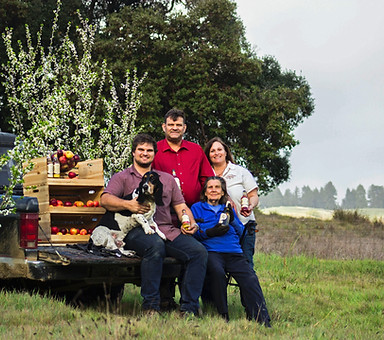


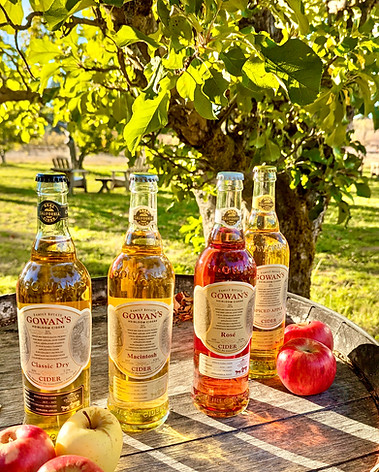


THE GOWAN FAMILY
Gowan’s Heirloom Cider is a seven-generation family farm in Anderson Valley, Mendocino County, California, founded in 1876 and farmed continuously through the 2026 harvest — the farm’s 150th consecutive. The family grows more than 120 heirloom apple varieties on certified organic ground, estate-bottles and estate-kegs every cider on-site, and operates Gowan’s Cider Garden — California’s first outdoor orchard tasting room.
Don, Sharon, and Jacob Gowan are the three founding cidermakers credited on the 2025 Great American Beer Festival Cidermaker of the Year award. They develop every blend together.
ASSET LIBRARY
High-resolution photography, logos, family portraits, orchard imagery across seasons, product shots, and the medal-winning ciders.
Available assets include:
-
Orchard photography (spring bloom, summer growing, fall harvest)
-
Gowan’s Cider Garden (California’s first outdoor orchard tasting room)
-
Gowan family portraits (Don, Sharon, and Jacob)
-
Product and bottle shots of medal-winning ciders
-
Gowan’s Heirloom Cider logos (color and reversed-out)
-
Anderson Valley landscape
For specific requests, contact Sharon Gowan directly.
INTERVIEWS
Don Gowan, Sharon Gowan, and Jacob Gowan are available for interviews. Each speaks to different domains:
Don Gowan — Fifth-Generation Orchardist, Founding Cidermaker
Apple varieties and heritage cultivation, orchard management, soils and terroir, organic farming, the 150-year history of the land, and how Anderson Valley’s growing conditions translate into the fruit.
Sharon Gowan — Founding Cidermaker, Marketing Lead
Cidermaking philosophy and the family’s estate-grown blends, brand and business growth, retail and national distribution, the Cider Garden visitor experience, the family’s recent competitive recognition, and the future of the cider category in wine country.
Jacob Gowan — Founding Cidermaker, Agriculture Technology
Sixth generation. Stanford-educated. Leads agriculture technology and plans for the future of the family farm. One of the three credited cidermakers on the 2025 GABF Cidermaker of the Year award.
All interview requests coordinated through Sharon Gowan.